
Open-cell and closed-cell foam
Spray Foam Insulation in Brainerd, MN
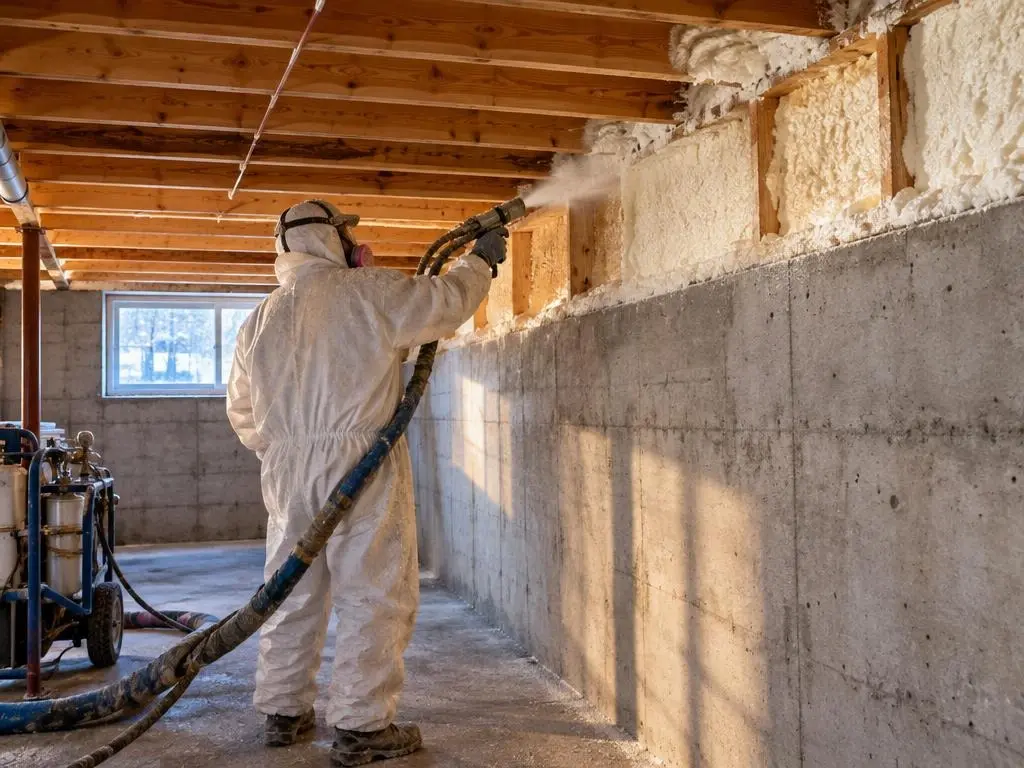
Foam picked for each surface: dense closed-cell where moisture and cold meet, open-cell where air sealing and sound matter more.
- Free on-site estimates
- Written quote listing R-value and depth area by area
- Air leaks and moisture checked before anything is covered
Two Foams, Different Jobs
Spray foam insulation in Brainerd works hardest where cold air and moisture meet the house: rim joists, basement walls, kneewalls, cathedral ceilings and steel buildings. Foam goes on as a liquid, expands into every gap and cures in place, so it insulates and stops air in one layer. In a city where Wikipedia's climate table shows a January average low of -2.0F and a record of -54F, that air seal matters as much as the R-value. We spray two kinds of foam, and choosing between them is the first decision on every job.
Closed cell vs open cell
Cured closed-cell foam is hard and dense. HomeGuide rates it at R-5 to R-7 per inch, and at normal thickness it slows water vapor and does not absorb water. It adds some stiffness to the surface it is sprayed on. Open-cell foam is lighter and softer, expands much more, and lists at R-3.5 to R-3.7 per inch. It seals air well and quiets sound, but water vapor can pass through it, so in a cold climate it usually needs a vapor retarder on the warm side or a design that lets moisture dry.
In central Minnesota, those differences point closed-cell toward the cold, damp or tight places: rim joists, foundation walls, crawl spaces, the underside of roof decks in vaulted ceilings, and steel pole buildings. Open-cell fits interior walls, above-grade cavities, floors between conditioned spaces and some attic rooflines where the moisture plan is handled.
Why the climate zone matters
Minnesota's energy code county list puts Crow Wing County in Climate Zone 7. The efficientwindows.org summary of that code lists R-49 for ceilings and, for wood-frame walls, R-20 plus R-5 of continuous insulation or R-13 plus R-10. Those numbers drive how thick foam has to be. In a 2x6 wall, closed-cell can reach high R-values in a few inches and leave room for wiring. On a roof deck with no attic, getting to code-level R-value with fiberglass is hard without room for a vent channel, and that is a common reason to use closed-cell there. We size the thickness to the target and write both on the quote.
Where we use foam in a Brainerd house
The rim joist is our most common foam job. It runs around the whole perimeter on top of the foundation, it is often bare wood with a little fiberglass stuffed in, and it lets cold air into the basement all winter. Closed-cell foam sprayed 2 to 3 inches thick seals and insulates it in one pass.
Above that, we foam kneewalls and the short attic floors behind them in story-and-a-half homes, the floors of bonus rooms over garages, cantilevers that stick out past the foundation, and the top plates and penetrations in the attic before blown-in goes on top. In older homes from Brainerd's railroad years, there are often open cavities between floors that act as chimneys for warm air, and foam is the practical way to close them.
Cabins, vaulted ceilings and steel
Lake homes around Brainerd often have vaulted ceilings, dormers and log or cedar walls that were built for summer. Where the ceiling follows the roof and there is no attic, closed-cell against the roof deck from below can insulate and seal without vent channels. In pole barns and shops, foam on the steel stops the condensation that drips off the roof whenever warm, moist air hits cold metal.
What spray foam is not for
Foam is not a cure for a leak. If a roof, window or plumbing leak is wetting the framing, it has to be fixed first, or foam will hide the damage. On a big open attic floor foam is not the cheapest route either; sealing the leaks and then blowing in cellulose or fiberglass usually gets there for less. And foam should not cover old knob-and-tube wiring or vermiculite that may contain asbestos until those are checked. If we see any of those, we tell you before we price the work.
Getting ready and getting back in
Spraying is fast; the prep takes longer. We cover floors and belongings, mask windows and outlets, and set up ventilation. HomeGuide advises vacating for 24 hours or more while foam cures. In a basement that usually means you plan a day away; for a detached shop or garage it may not affect the house at all. Foam also needs the surface and material within a working temperature range, so for cold spaces in winter we plan heat or pick a better date. Once it cures, foam does not settle or sag, so the thickness we leave is the thickness you keep.
Tell us which spaces you are thinking about and what you have noticed, such as frost, drafts, cold floors or dripping steel. We will look, explain where foam earns its cost, and give you a written price. Get a free estimate
Where Spray Foam Goes
Areas we spray most often, and the foam we usually choose for each.
Closed-cell spray foam
Dense foam at R-5 to R-7 per inch (HomeGuide) that slows vapor; used on rim joists, foundation walls, crawl spaces and steel.
Open-cell spray foam
Lighter foam at R-3.5 to R-3.7 per inch that seals air and dampens sound; used in interior and above-grade cavities with a vapor plan.
Rim joists and band boards
Foam sprayed on the wood band above the foundation to stop the draft along the whole perimeter of the basement.
Kneewalls and bonus rooms
Sealing and insulating the walls and floors around upstairs rooms in story-and-a-half homes and rooms over garages.
Vaulted ceilings and roof decks
Closed-cell sprayed under the roof deck where there is no attic or no room for vent channels.
Exterior walls in remodels
Open stud bays during a remodel or addition, sized to the Zone 7 wall target.
Steel buildings
Foam on roof and wall steel in shops and pole barns to insulate and stop condensation.
Published Spray Foam Insulation Costs
| Job | Range and source |
|---|---|
| Spray foam, installed | $1.50 to $5.00 per sq ft (HomeGuide) |
| Open-cell / closed-cell | $1.50 to $3.50 / $3.00 to $5.00 per sq ft (HomeGuide) |
| About 1,000 sq ft | $1,500 to $5,000 (HomeGuide); $3,150 to $7,500 existing home (Fixr) |
| Existing walls / new construction | $3.15 to $7.50 / $2.75 to $6.50 per sq ft (Fixr) |
| All exterior walls | $4,000 to $10,000 (HomeGuide) |
| Whole house | $8,000 to $20,000 (HomeGuide); $10,000 to $30,000 (Fixr) |
| Typical job minimum | $1,000 to $2,000+ (HomeGuide) |
These are national figures from HomeGuide (2026 guide) and Fixr (2025). Foam type, thickness, access and prep move the total, and many small jobs hit a minimum. The figure on your written estimate is the one you are charged.
How a Spray Foam Job Runs
1. Site visit
We look at each space, check for leaks, damp wood, old wiring and vermiculite, and measure.
2. Written quote
Each area lists foam type, thickness, target R-value and price.
3. Prep
We cover and mask, set up ventilation and confirm the space is warm enough to spray.
4. Spray and trim
Foam goes on in passes to the planned thickness, and we trim where needed.
5. Cleanup and walk-through
We clean up, show you the work, and tell you when the space is ready to use again.
Why Choose Us for Spray Foam Insulation
Foam only where it pays
If blown-in or air sealing does the job for less in part of the house, we say so.
Thickness in writing
Thickness and R-value are named on the quote, so you can line it up fairly against other bids.
Problems flagged first
Leaks, old wiring or suspect vermiculite get pointed out before anything is covered.
Spray Foam Insulation Questions
Is closed-cell spray foam worth the extra cost in Minnesota?
Usually yes for rim joists, crawl space and basement walls, steel buildings and roof decks with no attic above, because it slows vapor and holds more R-value per inch. In interior walls or above-grade cavities, open-cell often does the job for less. We price both where both could work.
How thick should spray foam be on a rim joist?
It depends on the target R-value and the foam. Closed-cell at R-5 to R-7 per inch gets a meaningful R-value in a few inches. We write the planned thickness on the quote.
How long should the household stay away after spraying?
HomeGuide's advice is to allow 24 hours or more. For a detached shop or garage, it may not affect the house at all. We confirm timing for your job.
Can spray foam be installed in winter?
In heated spaces like basements, yes. For cold attics, crawl spaces or unheated buildings, the foam and the surface need to be in a working temperature range, so we add heat or plan a milder day.
Does spray foam stop moisture?
Closed-cell foam slows vapor and keeps warm, moist air off cold surfaces where it would condense. It does not fix a leak, and it is not waterproofing. Leaks get repaired first.
Spray Foam Insulation Service Areas
- Spray Foam Insulation in Brainerd, MN
- Spray Foam Insulation in Baxter, MN
- Spray Foam Insulation in Nisswa, MN
- Spray Foam Insulation in Pequot Lakes, MN
- Spray Foam Insulation in Crosslake, MN
- Spray Foam Insulation in Breezy Point, MN
- Spray Foam Insulation in Crosby, MN
- Spray Foam Insulation in Ironton, MN
- Spray Foam Insulation in Deerwood, MN
- Spray Foam Insulation in Emily, MN
- Spray Foam Insulation in Pine River, MN
- Spray Foam Insulation in Hackensack, MN
- Spray Foam Insulation in Walker, MN
- Spray Foam Insulation in Little Falls, MN
- Spray Foam Insulation in Pillager, MN
- Spray Foam Insulation in Motley, MN
- Spray Foam Insulation in Staples, MN
- Spray Foam Insulation in Garrison, MN
- Spray Foam Insulation in Aitkin, MN
- Spray Foam Insulation in Lake Shore, MN
- Spray Foam Insulation in East Gull Lake, MN
- Spray Foam Insulation in Fifty Lakes, MN
Get a Spray Foam Insulation Estimate
Tell us the spaces and what you have noticed. We will look and send a written foam plan and price.