
Bypass sealing, then depth
Attic Insulation & Air Sealing in Brainerd, MN
Stop warm air leaking into the attic first, then add insulation to a depth that fits a Zone 7 winter.
- Free on-site estimates
- Written quote listing R-value and depth area by area
- Air leaks and moisture checked before anything is covered
The Attic Is Where Brainerd Houses Lose Heat Fastest
Attic insulation and air sealing in Brainerd go together, and the order matters. Warm air rises, and in a house heated through a Crow Wing County winter it pushes up through every gap in the top floor ceiling. Sealing those gaps first, then adding insulation, is what stops ice dams, attic frost and cold upstairs rooms. Adding more fluff over an unsealed ceiling helps less than most people expect, because air moves right through loose fiberglass and cellulose.
How much insulation the attic needs
Minnesota's energy code county list places Crow Wing County in Climate Zone 7, and the efficientwindows.org summary of that code lists R-49 for ceilings. For an attic with no insulation, the Department of Energy sets R-60 as the Zone 7 target, and where 3 to 4 inches already cover the floor it advises adding R-49. In loose fill, that means a deep layer: HomeGuide lists blown fiberglass at R-2.2 to R-2.9 per inch and cellulose at R-3.1 to R-3.8 per inch, so reaching those targets takes well over a foot of material. Many older Brainerd attics have a few inches of old fill that has settled, or batts with gaps between them.
The leaks we seal
The biggest air paths into a Brainerd attic are usually the same handful. Plumbing stacks and vent pipes run through holes cut larger than the pipe. Chimney chases and flue openings leave gaps around masonry or metal, which we close with metal flashing and fire-rated sealant, never foam against the flue. Recessed lights and electrical boxes leak through and around the fixture. Bath fans often vent into the attic instead of outside. Most hatches and fold-down attic ladders have no insulation and no seal. Top plates of interior walls leave a crack along every wall. In older homes there can also be open chases or soffits over kitchen cabinets that run straight up from the floors below. We seal these with spray foam, caulk, rigid board and weatherstripping, depending on the gap.
Ice dams and heavy snow
Minnesota Rule 1303.1700 sets Crow Wing County's ground snow load at 60 pounds per square foot, among the higher values in the state, and Wikipedia's climate figures show Brainerd averaging about 48 inches of snow a year. That snow sits on roofs for months. When heat leaks into the attic, it warms the roof deck, the snow melts from below, and the water refreezes at the cold eaves. Each cycle builds the ridge until water backs up under the shingles. Sealing the attic floor cuts the heat that starts the cycle. Good soffit and ridge ventilation, with baffles that hold the new insulation back from the soffits, keeps the roof deck cold.
Attic frost
On very cold mornings, some attics grow a layer of frost on the underside of the roof boards and the tips of the roofing nails. That frost comes from moist indoor air leaking into the attic and freezing on the coldest surface. When it warms up, the frost melts and drips onto the insulation and ceiling, and that is easy to mistake for a roof leak. The fix is the same as for ice dams: seal the air paths and make sure bath and kitchen fans vent outdoors.
Story-and-a-half and finished attics
Brainerd has plenty of story-and-a-half homes with sloped ceilings, kneewalls and small attic spaces behind them. These are hard to insulate well with loose fill. We usually foam the kneewalls and the floor of the short attic behind them, then insulate the sloped section and the flat top attic separately. In finished attic rooms with no access to the slope, we explain what can be filled from inside and what would wait for a reroof.
Vaulted ceilings without an attic
Cabins and newer homes around the lakes often have cathedral ceilings that follow the roof. Without an attic there is no room to blow insulation, and limited room for a vent space. Closed-cell foam against the roof deck from below, or rigid foam added on top during a reroof, are the usual options. We look at the framing depth and explain the trade-offs in writing.
The same goes for the bonus rooms and additions common on Brainerd homes, where one roof can cover a flat attic, a slope and a section with no access at all. We treat each section on its own line so the cost of each part is clear and you can decide which parts to do now and which to leave for a reroof or remodel. If the attic also holds ductwork or a bath fan that vents into it, we flag those too, because a leaky duct in a cold attic undoes a lot of good sealing.
Every attic job begins with a look, a list of the leaks we found, and a written quote that prices sealing apart from insulation. Get a free estimate
What an Attic Job Includes
Sealing, insulation and the details that keep an attic dry and cold.
Bypass and top plate sealing
Foam, caulk and board over the gaps around pipes, wires, chases and interior wall top plates.
Hatch and attic stair covers
Weatherstripping and an insulated cover so the access is not the weakest spot.
Recessed lights and bath fans
Sealing around fixtures and making sure fans vent outdoors, not into the attic.
Baffles at the soffits
Vent chutes that keep new insulation from blocking airflow at the eaves.
Blown-in to depth
Cellulose or fiberglass over the sealed floor, sized to the R-value on the quote.
Kneewalls and slopes
Foam on kneewalls and short attic floors in story-and-a-half homes.
Roof deck foam
Closed-cell under the deck where a vaulted ceiling leaves no attic.
Published Attic Insulation & Air Sealing Costs
| Job | Range and source |
|---|---|
| Attic insulation, average job | $1,000 to $2,700, about $1,800 average (HomeGuide) |
| Air sealing | $350 to $3,000 (HomeGuide) |
| Blown-in, attic | $0.90 to $2.40 per sq ft (HomeGuide attic guide) |
| Spray foam on the attic floor | $1,100 to $6,800 (HomeGuide) |
| Spray foam on the roof deck | $1,500 to $9,000 (HomeGuide) |
| Spray foam, attic (existing home) | $2,500 to $12,000 (Fixr) |
| Old insulation removal | $1 to $2 per sq ft (HomeGuide) |
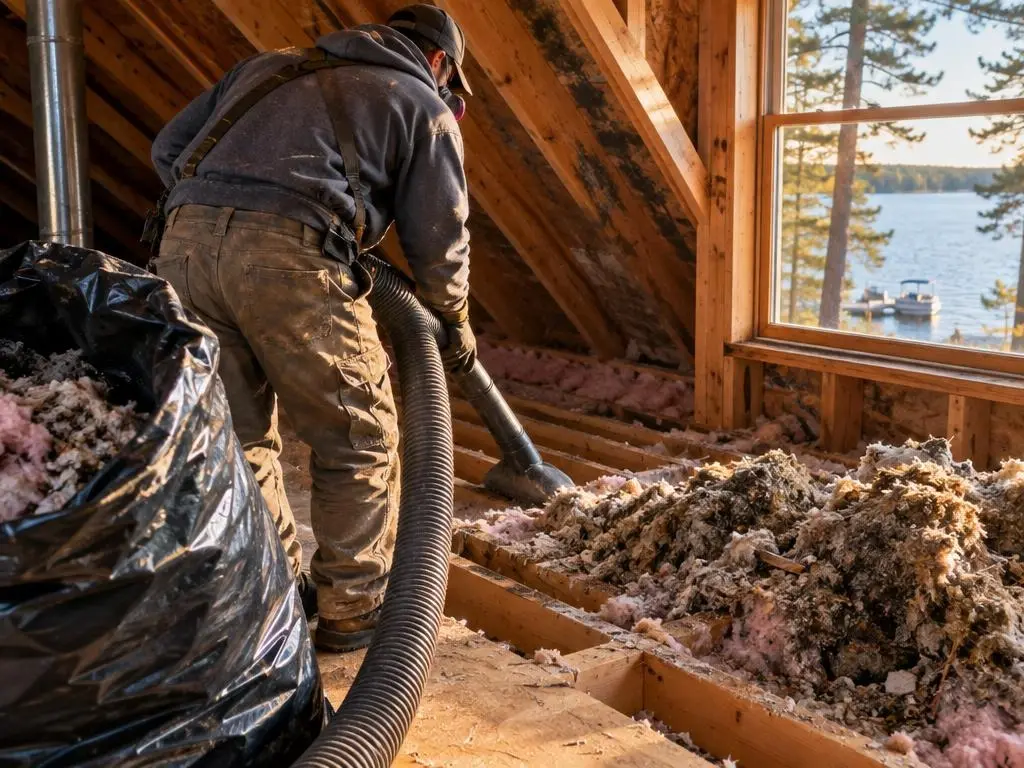
Two national sources supply these ranges: HomeGuide (attic guide, January 2026) and Fixr's spray foam guide from 2025. The amount of sealing, depth, access and removal change the number. We price your attic after seeing it, and the written estimate is the price.
How We Handle an Attic
1. Inspect
Measure depth, find the bypasses, check ventilation, look for frost stains, leaks and vermiculite.
2. Quote
Air sealing and insulation priced as separate lines, with the target R-value.
3. Seal
Close bypasses, top plates, chases and the hatch; install baffles at the soffits.
4. Insulate
Blow fill to depth with depth markers so you can see it, or spray where foam fits.
5. Review
Walk through what was sealed and how deep the insulation is.
Why Choose Us for Attic Insulation & Air Sealing
Sealing is its own line
You see exactly what the air sealing costs and what it covers.
Ventilation kept open
Baffles go in before insulation so soffits keep breathing.
Depth you can check
Depth markers stay in the attic after we leave.
Attic Insulation & Air Sealing Questions
What is the attic insulation code in Minnesota?
The efficientwindows.org summary of Minnesota's energy code lists R-49 for ceilings in Climate Zone 7, where Crow Wing County sits. For an attic with no insulation at all, DOE's figure in that zone is R-60. Local adoption and permits vary, so check with your city for a remodel.
Will more attic insulation stop ice dams?
Only partly. Most ice dams start with warm air leaking into the attic, so sealing those leaks comes first. Insulation added afterward holds the gain, and open soffit vents keep the roof deck cold.
What makes frost build up inside my attic in January?
Moist air from the house is leaking into the attic and freezing on the cold roof boards and nails. Sealing the ceiling and venting bath fans outdoors are the usual fixes.
Can you add insulation over what I already have?
Often, yes, provided nothing in it is damp or dirty. We often need to pull some back to seal the bypasses underneath, then blow new fill over the top.
What time of year works for attic work?
Spring through fall is easiest, since attics are unheated. We can do some sealing in winter, but extreme cold limits foam and makes the work slower.
Attic Insulation & Air Sealing Service Areas
- Spray Foam Insulation in Brainerd, MN
- Spray Foam Insulation in Baxter, MN
- Spray Foam Insulation in Nisswa, MN
- Spray Foam Insulation in Pequot Lakes, MN
- Spray Foam Insulation in Crosslake, MN
- Spray Foam Insulation in Breezy Point, MN
- Spray Foam Insulation in Crosby, MN
- Spray Foam Insulation in Ironton, MN
- Spray Foam Insulation in Deerwood, MN
- Spray Foam Insulation in Emily, MN
- Spray Foam Insulation in Pine River, MN
- Spray Foam Insulation in Hackensack, MN
- Spray Foam Insulation in Walker, MN
- Spray Foam Insulation in Little Falls, MN
- Spray Foam Insulation in Pillager, MN
- Spray Foam Insulation in Motley, MN
- Spray Foam Insulation in Staples, MN
- Spray Foam Insulation in Garrison, MN
- Spray Foam Insulation in Aitkin, MN
- Spray Foam Insulation in Lake Shore, MN
- Spray Foam Insulation in East Gull Lake, MN
- Spray Foam Insulation in Fifty Lakes, MN
Get an Attic Insulation & Air Sealing Estimate
Send us a photo of any ice at the eaves or frost in the attic. We will look and write up a sealing and insulation plan.